-
Mobile Version
Scan with Mobile
- Member Center
Vacuum magnetic field annealing high-temperature furnace
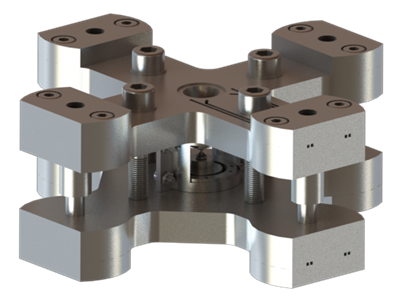
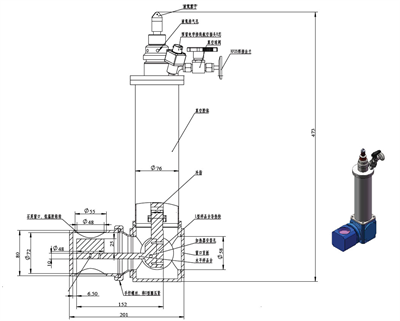
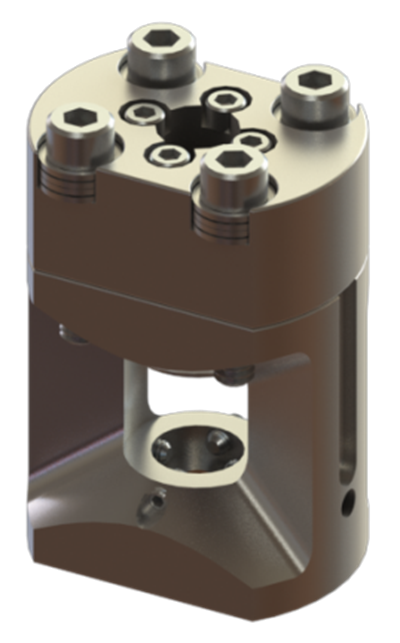
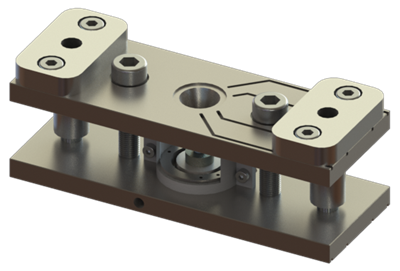
The high-temperature vacuum magnetic field heating furnace system produced by our company is a feedback regulated heating system composed of a heating high-temperature furnace, a high-temperature furnace heating power supply, upper computer control software, electromagnets, high-precision bipolar constant temperature power supply, molecular pump group, and water cooling unit.
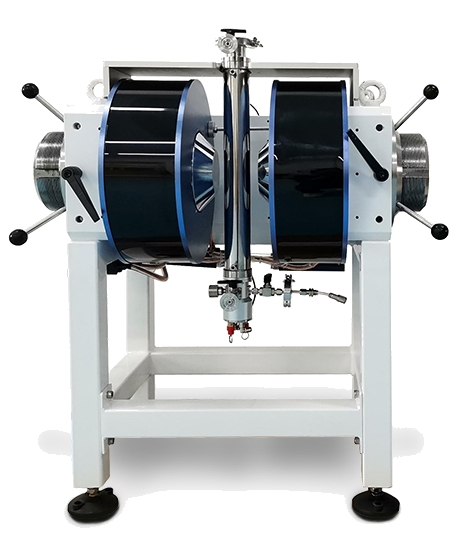
The high-temperature magnetic field heating furnace system is first subjected to rough pumping of the vacuum chamber (sample chamber) by a mechanical pump (dry pump) in the molecular pump group. When the maximum vacuum that can be turned on by the molecular pump is reached, the molecular pump is turned on for high vacuum pumping to achieve the desired vacuum degree for the customer. Open the software and input the required magnetic field and temperature values. Through closed-loop feedback adjustment, the temperature of the sample inside the device is automatically controlled and stabilized at a certain temperature value. The software can complete the experiment according to the user's given experimental conditions.
Magnetic field control: Users can directly set the required magnetic field size through software, and the actual magnetic field value is read by a high-precision Gaussian meter. The actual read magnetic field value is then fed back to the high-precision constant current power supply. After processing by the internal software of the power supply, the output current of the high-precision constant current power supply is directly controlled to achieve the magnetic field required by the user, and displayed in real-time on the software;
Temperature control: By directly setting the required temperature value through the human-computer interaction interface on the software, the computer software processes the instructions and sends them to the high-temperature furnace heating controller. The controller reads the actual temperature value of the sample area through a temperature sensor (thermocouple), and adjusts the output current through its internal fuzzy control PID to stabilize the temperature value within a certain accuracy range, thereby achieving different temperatures required by the user.
Vacuum environment: The vacuum environment is obtained through a molecular pump group, displayed and monitored by a high vacuum full-scale vacuum gauge, and the detection results are transmitted to the computer in real time.
Annealing process: Heat the sample in a strong magnetic field (or non-magnetic) environment to a certain temperature (user needs to set it themselves) and maintain it at that temperature. Then, continuously apply a magnetic field (which can be changed at any time) to achieve the user's goal. After that, turn off the magnetic field, turn off the heating environment, and cool it to room temperature.
Sample environment: The high-temperature magnetic field heating furnace can simultaneously place the tested sample in a strong magnetic field, high vacuum, and high-temperature environment. At the same time, these three experimental environments can be combined individually or arbitrarily to meet the testing requirements of different samples in different environments.
Scope of application:
Various soft magnetic materials that require heating or demagnetization in high temperature, high vacuum, and strong magnetic field environments.
Main technical indicators:
The vacuum chamber and main components are made of 304 non-magnetic stainless steel;
The vacuum acquisition system used is a molecular pump group; Vacuum measurement is
Digital full range vacuum gauge;
※ Vacuum degree and leakage rate: ① Vacuum chamber ultimate vacuum degree 6 * 10-5Pa
(Cold state); ② Leakage rate<10-12 Pa.m3/s, vacuum degree varies with temperature,
Fluctuations may occur, which is a normal situation;
At room temperature to 900 degrees Celsius, the heating rate is better than 100K/min,
High temperature heating temperature of 1000 ℃; Temperature control accuracy: ± 1 ℃;
During heating, the heating wire is encapsulated in a quartz tube, with a maximum range of
The decrease in temperature is caused by the evaporation of the heating wire, which leads to surface adhesion of the sample
Pollution of objects;
※ Matching magnet power supply: bipolar, stability better than 50ppm/h,
Smooth zero crossing without breakpoints;
※ Matching electromagnet: Long term stability<± 0.5Gs;
※ Cooling method: Water cooling.